Last Updated on August 25, 2026 by Danielle Belleza
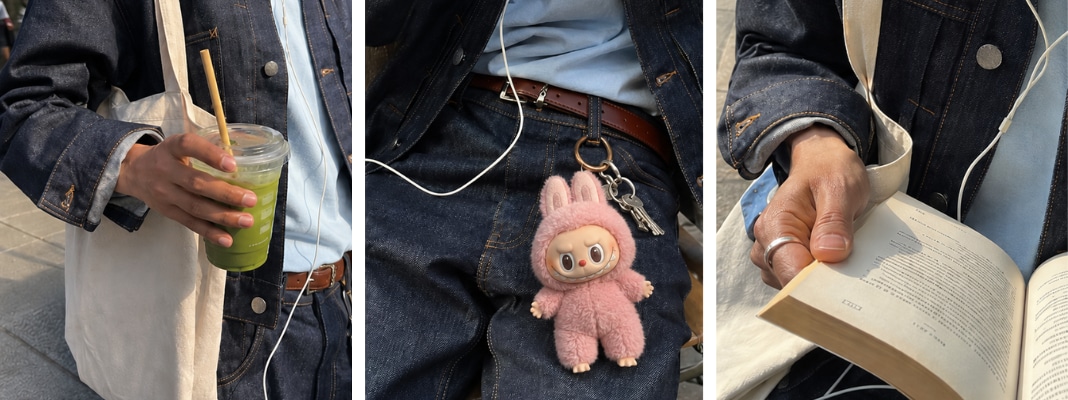
An iced matcha in one hand, feminist literature in the other.
A canvas tote from an independent bookshop. Wired earphones. A dangling bag charm. Wide straight-leg jeans. Either an oversized tee or a cropped top. Stacked jewelry. Chipped nail polish.
Together, they form the unofficial uniform of what the internet calls the “performative male.”
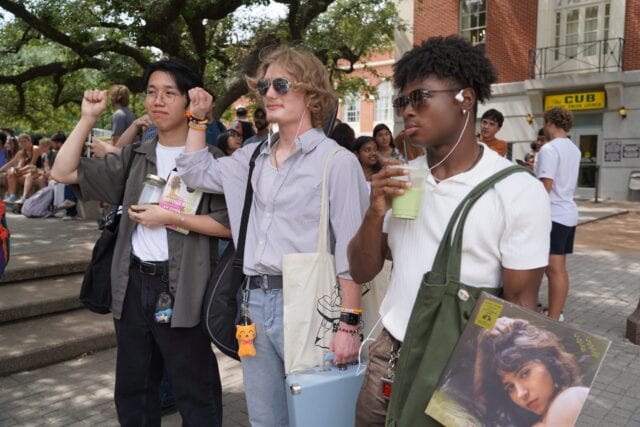
Performative Male Contest at Vera Daniel Plaza. Caleb Garcia | Photographer
The term was popularized on TikTok around mid to late 2025 as an internet inside joke among users who teased men who drank oat milk matcha lattes. But like most internet jokes, it quickly became shorthand for something bigger. In short, he is the antithesis of the gym bro. If male stereotypes existed on a spectrum, these two would sit on opposite ends.
The performative male is in touch with his feminine side and likes to make it known. This visibility is part of the performance, either to appeal to women or to be perceived as a softer, more enlightened alternative to the men they’re trying to distance themselves from.
To be fair to the performative male, male stereotypes have been around forever. Before him, there were the classic jocks and nerds, then the finance bro, the soft boy, and every other generation’s version of manhood turned into a recognizable type.
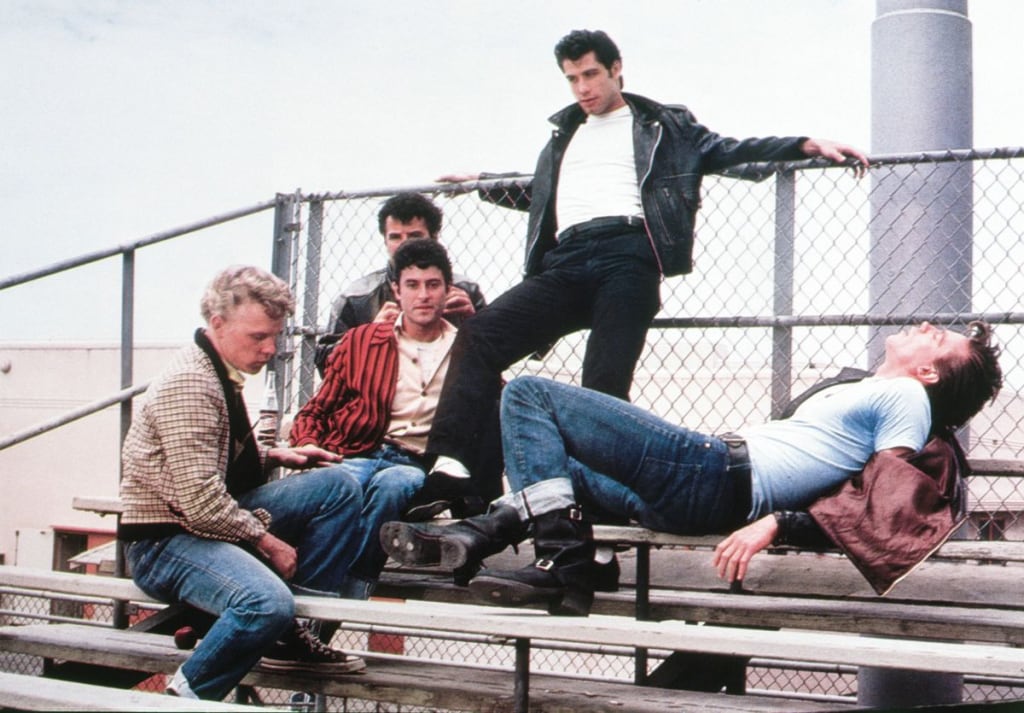
Greasers in Grease, 1950’s. Anton Gutierrez | Pinterest
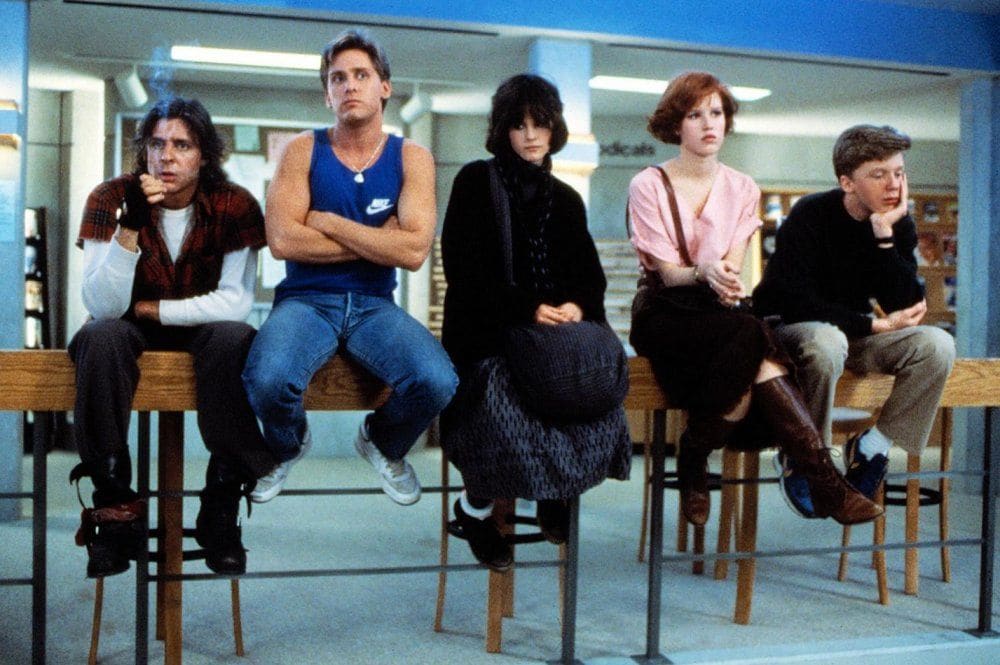
The Breakfast Club’s “the brain, the athlete, the basket case, the princess, and the criminal”, 1980’s. Micah | Pinterest
In fact, the discourse on the performative male is only the tip of the iceberg in a larger conversation about style as performance, and where it places us within the endless categories and subcategories of human beings.
Perhaps the performative male isn’t the problem itself, but a symptom of a culture that has turned styling and identity into performance. A performance in pursuit of external validation.
Everyone does it. And everything we do may be unknowingly performative at some point.
All The World’s A Stage and Everyone’s A Performer
Shakespeare had already put it plainly in As You Like It: “All the world’s a stage, / And all the men and women merely players.”
From cinema to social media, we’ve been trained to think of identity in categories. We look for labels that give us some kind of grounding, some feeling of belongingness, or at least a way to understand where we stand in relation to everyone else. This is what makes the performative male such an interesting entry point: he opens up a larger conversation about the tug and pull between authenticity and the need for social belonging.
Long before the performative male, people were already using clothes, music, and brands to tell the world who they were and what circles they belonged to. Before, donning a pair of glasses (and god forbid you had braces) could automatically place you in the “nerd” category.
But visual signals of status and identity go back much further than high school stereotypes. In the ancient world, even the color of your clothing could say something about you; Tyrian purple, for example, was so expensive to produce that it became a marker of wealth and power. Today, identity is much more complex, yet there still seem to be endless branches of categories that pop up every now and then online.
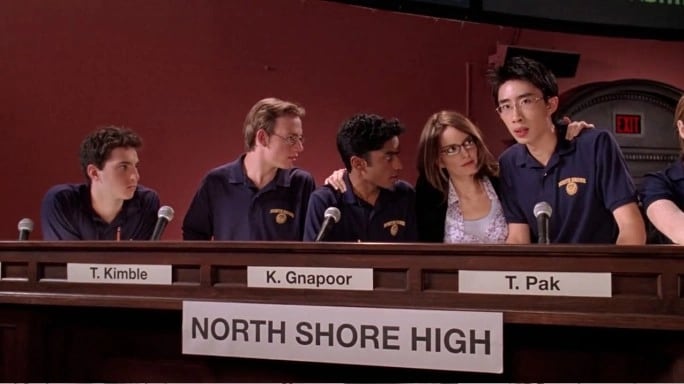
Mean Girls “Mathletes”, Early 2000’s
Carl Jung’s Theory Of The Persona
This is where Carl Jung’s analytical psychology of the persona comes in. Jung used the term to describe the social mask we show the world: the version of ourselves shaped by public life, group expectations, and the desire to be understood a certain way. In that sense, the performative male isn’t doing something entirely new. He is simply a modern, internet-coded version of an old human habit: creating a self that can be recognized by others.
While the persona helps us move through everyday life, Jung cautioned against becoming too attached to it. When people mistake their social mask for their whole identity, they can drift away from their more authentic self, repressing genuine feelings. The problem begins when the performance becomes too polished, or when the costume starts to feel more real than the person underneath it.
A tote bag with Margaret Atwood’s The Handmaid’s Tale inside it or an iced matcha can be genuine pieces of someone’s taste. But once those things are arranged mainly to signal desirability, style stops being pure self-expression and starts becoming a persona.
Danish Umar on Instagram
Despite the “performative male” beginning as a meme and then as a funny challenge people are participating in, it can actually tell us a lot about the performance of our own personas, and how often that performance hides in plain sight. It teaches us the importance of being genuine for our own sake. Not just in how we style ourselves everyday, but in how we live our individual lives.
So the next time something catches your eye, ask yourself if you genuinely like it, or whether your algorithm has simply taught you to want it. Free yourself from the performance.