Last Updated on August 25, 2026 by Danielle Belleza
Sandy steps out in black leather pants and red heels. Her hair is teased into a dramatic ’70s blowout and her makeup is transformed. Everyone gasps. It’s a complete transformation.
From Grease to The Princess Diaries, movies have long used clothing, hairstyles, and accessories as a shortcut for something much deeper: the moment a character steps into a new identity.

Olivia Newton-John as Sandy Olsson in the final scene of the 1978 film Grease. Photograph: Paramount Pictures/Allstar
While these cinematic transformations often carry outdated ideas about beauty, particularly the notion that women must alter their appearance to become more “desirable”, they also reveal something fascinating about the relationship between style and identity. Mia Thermopolis trading her curls and glasses for a sleek blowout and contact lenses in The Princess Diaries is a perfect example of how Hollywood turns appearance into a visual symbol of transformation.
The message behind these scenes is complicated, but the psychology behind them is surprisingly relatable. In real life, we may not have a dramatic makeover montage, yet many of us still change the way we dress, style our hair, or present ourselves when we enter a new chapter. Starting a first job, ending a relationship, becoming a parent, moving to a new place, graduating, changing careers, or simply reaching a point where an old version of ourselves no longer feels quite right.
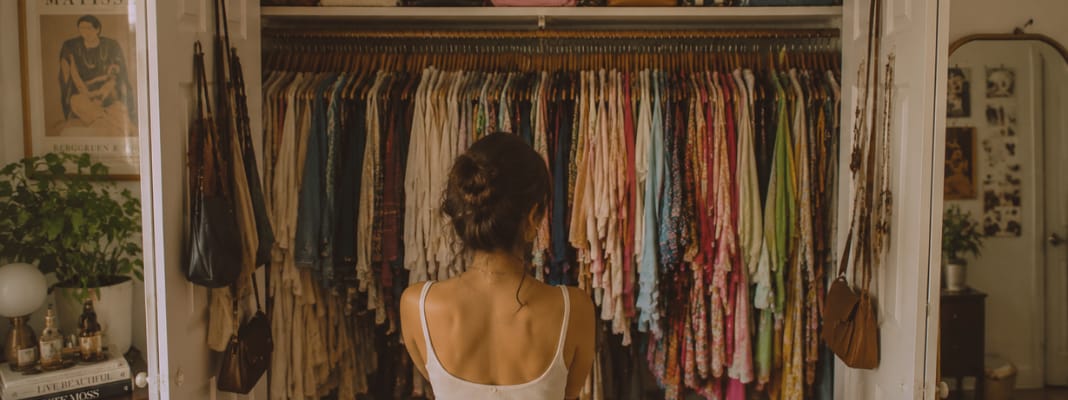
We see that clothing can also work inwardly, acting as a physical reminder of the identity we associate with ourselves. In a way, our closets become tangible archives of our lives, holding the different versions of ourselves we have carried through different chapters.
Clothing and Identity
Consumer researcher Susan Schultz Kleine explored how clothing can serve as more than something we wear. Her research found that certain garments become tied to autobiographical memories, helping people reconnect with past experiences and present versions of themselves.
Beautifully, she described this relationship as “who I was, who I am, [and] who I am becoming.” Kleine found that meaningful clothes could represent a present self, a past self, or even a self someone was in the process of becoming.
She found that meaningful clothing often reflected and reinforced a person’s current self-image, creating a sense of connection with the identity those garments represented. Whether someone was expressing their present self, preserving a past version of themselves, or stepping toward a future identity, clothing could serve as a tangible reminder of who they were becoming.
“Who I was, who I am, who I am becoming.”
Susan Schultz Kleine
Clothing and accessories carry symbolic meanings that we can absorb without much conscious thought. So the pair of sunglasses you reached for this morning or the outfit you instinctively put together may seem like ordinary choices, but they can quietly reflect the version of yourself you identify with at that moment.
This is explored further through the concept of enclothed cognition, introduced by researchers Adam and Galinsky. Their research suggests that clothing can influence our psychological processes through both the symbolic meaning we attach to what we wear and the physical experience of wearing it.
The idea explains why slipping into a tailored outfit before an important presentation can make someone feel more confident, why putting on a uniform can help people mentally step into a professional role, or why wearing a favorite pair of glasses can make someone feel more like themselves. The clothing itself does not transform us, but the meaning we attach to it can act as a psychological cue, reminding us of the qualities, responsibilities, or identities we associate with that look. In everyday life, getting dressed is not always just a practical decision, it can be a quiet ritual of stepping into the version of ourselves we need for that moment.
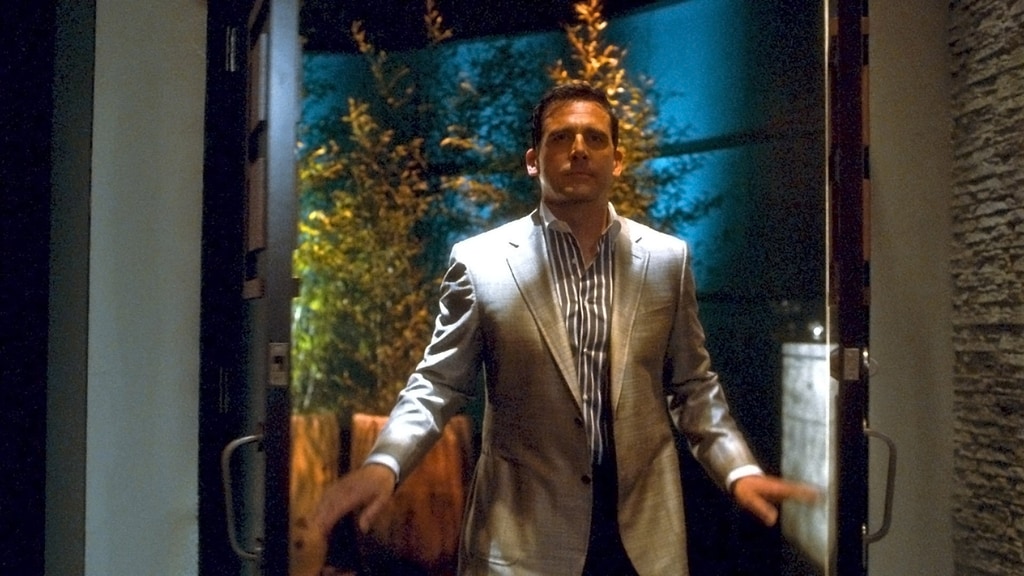
Crazy, Stupid, Love (2011) Credit: Courtesy of Warner Bros. Picture
The Joy of Becoming (and Rebecoming)
Movies love a dramatic reveal: the new haircut, the new outfit, the moment a character walks into the room and everyone suddenly sees them differently. But in real life, style rarely works like a switch that turns us into a completely new person. The more interesting thing is that our clothes often meet us somewhere in the middle. They can help us experiment, express, and reconnect with parts of ourselves that have been waiting to come forward.
A closet will inevitably collect pieces from different seasons of our lives. Some items remind us of where we have been, while others represent where we hope to go. Whether it’s putting on a suit before a big career move, changing your look after a breakup, or finding a pair of glasses that finally feels like “you,” style gives us a way to play with identity. Not every transformation needs a movie-worthy makeover scene. Sometimes, the smallest changes are enough to remind us that we are always allowed to see ourselves differently and play with our reality.