Last Updated on September 14, 2026 by Danielle Belleza
Fashion Week Spring/Summer 2027 is officially underway. New York got an early start last week, with the city’s fashion calendar now unfolding through September 15.
Ralph Lauren was among the first major names to set the tone, presenting its Spring 2027 collection a day before the official Council of Fashion Designers of America (CFDA) New York Fashion Week schedule began. The show served as an elegant prelude to the week ahead, ushering in a new season of runway moments, celebrity appearances, and statement-making style.
Ralph Lauren’s Spring 2027 RTW collection found its intrigue in the tension between masculine tailoring and unabashed romance. Menswear-coded waistcoats and vests surfaced throughout the runway, from sharply pinstriped versions with elongated tails to richly brocaded styles worn with neckties, giving traditional suiting a distinctly feminine new context.
Paired with low-slung trousers, sculpted jackets, delicate lace, round sunglasses, feathers, and fluid eveningwear, the effect was less about borrowing from the boys than reworking familiar sartorial codes on Lauren’s own terms. It fit neatly into the designer’s description of the collection as an “irreverent take on romance,” balancing the discipline of classic tailoring with sensuality, softness, and a little theatrical flourish.
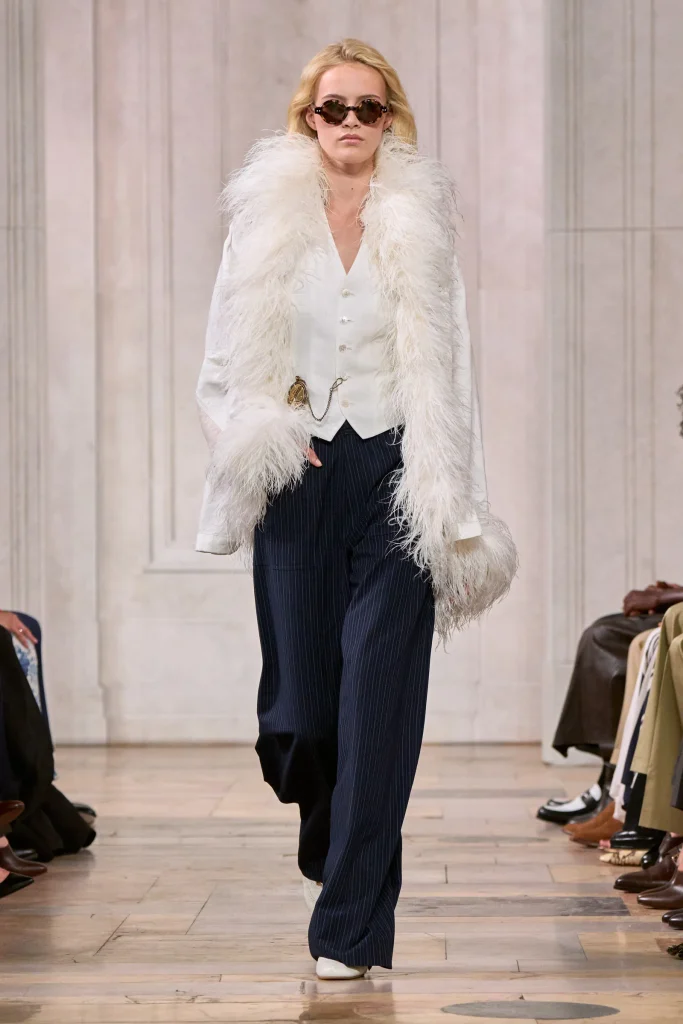
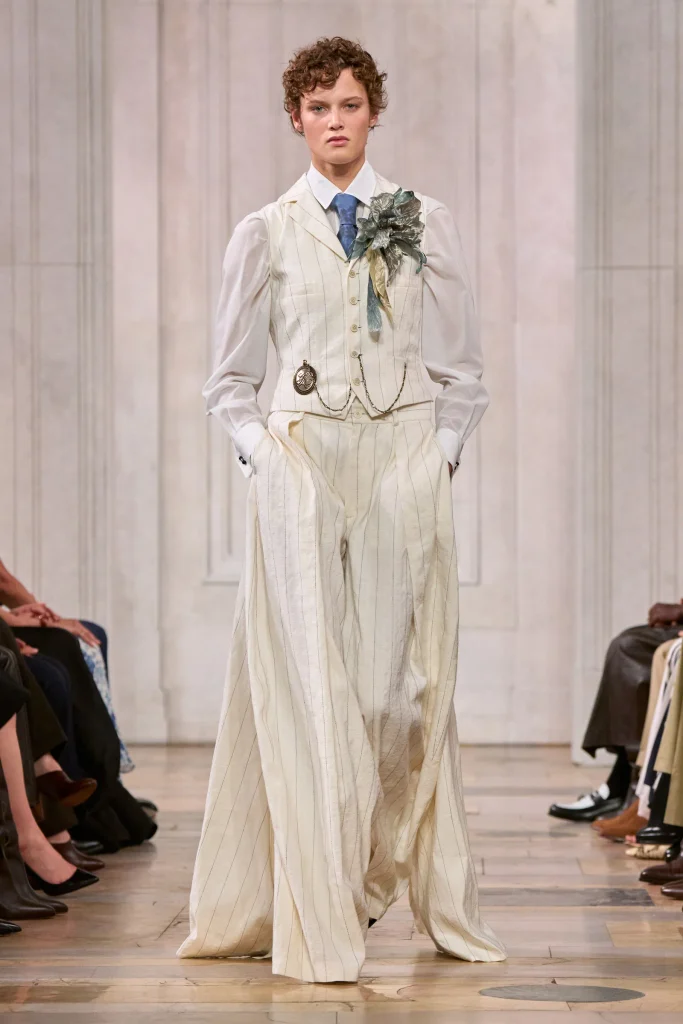

Ralph Lauren, New York Fashion Week Spring-Summer 2027 Ready-To-Wear
Looking for Something Similar?

Who Decides What’s Fashionable?
Watch closely over the next several months and elements of these silhouettes will likely begin filtering into mainstream retailers, independent boutiques, and more accessible fashion labels by early next spring. The runway-to-retail pipeline is rarely a matter of direct copying. Instead, proportions, fabrics, styling ideas, and recurring details get translated, softened, and repackaged for a broader audience. A waistcoat shown with exaggerated tailoring in September might reappear months later as a cropped vest layered over a blouse, a relaxed matching set, or a more wearable interpretation of the same masculine-feminine contrast. By the time those ideas reach store racks, they can feel spontaneous or simply “of the moment,” even though their origins often trace back to collections, buyers, editors, stylists, and fashion houses that helped establish the visual language of the season.
That process raises a more interesting question: who gets to decide what counts as “good taste” in the first place? Fashion Week has long functioned as one of the industry’s most powerful taste-making machines, giving a relatively small group of designers, editors, buyers, celebrities, and cultural gatekeepers outsized authority to decide which colors, shapes, references, and styling choices suddenly feel fashionable, sophisticated, or cool.
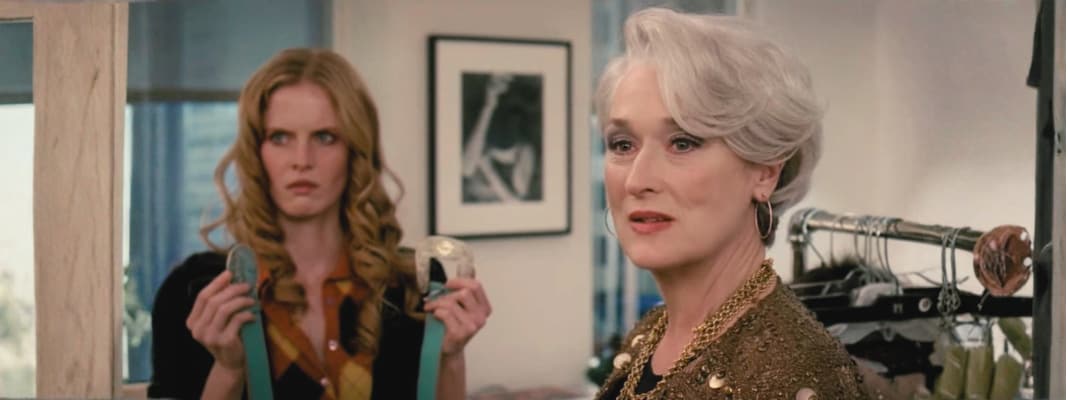
It’s essentially the argument behind Miranda Priestly’s famous cerulean-blue monologue in The Devil Wears Prada. Andy believes her clothes exist outside fashion, only to be reminded that even an ordinary sweater can be the endpoint of decisions made much further upstream.
The system is less top-down today, with street style, social media, creators, and consumers feeding trends back into fashion houses themselves, but the basic mechanism remains. What appears on a major runway can still influence what gets photographed, bought, replicated, stocked, and eventually accepted as the look of a particular moment.
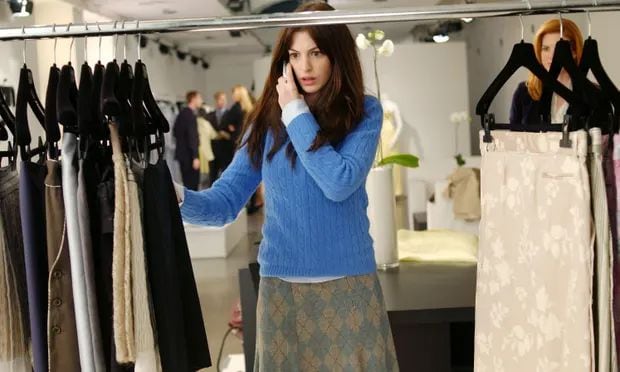
Anne Hathaway in The Devil Wears Prada. Photograph: Alamy Stock Photo
From Front Row to Your Social Media Feed
What has changed is who gets a seat at the table. TikTok, Instagram, resale platforms, fandoms, and niche online communities have weakened the old top-down hierarchy in which designers showed, editors interpreted, buyers selected, and consumers eventually followed. A creator, vintage reseller, fan account, or particularly well-dressed stranger can now push a forgotten silhouette back into circulation before a traditional fashion publication ever names it a trend. Social media has become especially influential among younger audiences.
In a 2025 survey, 41% of Gen Z respondents said they turned to social platforms first when searching for information, ahead of traditional search engines, and 90% said social content had influenced a purchase within the previous six months. Resale adds another route for trends to move through culture. ThredUp found that 39% of younger shoppers who bought secondhand apparel had done so through a social-commerce platform, allowing an old designer piece, a cult item, or a rediscovered decade to become newly desirable without waiting for the next runway season.
Influencers complicate this new hierarchy even further. They can act as independent tastemakers one moment and become part of a fashion house’s marketing machine the next through gifting, ambassadorships, paid partnerships, and front-row invitations.
In other words, editors and buyers no longer hold a monopoly on deciding what receives attention, but neither does the crowd. The new fashion hierarchy is flatter and far more participatory, yet algorithms increasingly decide which aesthetics, creators, and micro-trends become visible enough to feel culturally unavoidable.
Can Personal Style Ever Be Truly Original?
So, can anyone actually claim to have completely original style? Probably not, at least not in the sense of creating taste in a vacuum. What we wear is shaped by what we’ve seen, admired, rejected, inherited, rediscovered, and absorbed from the culture around us. But that doesn’t make individual style meaningless.
Personal taste lives in the choices we make with those influences: combining references that weren’t meant to go together, reviving something fashion had already dismissed, wearing a trend “wrong” on purpose, or choosing a pair of frames simply because they feel like us rather than because they’ve been declared the shape of the season. Perhaps the most stylish people aren’t those who exist outside fashion’s influence, but those who understand its signals without feeling obligated to obey them. Chic, in that sense, has less to do with wearing the approved look at the approved moment and more to do with knowing why you chose something in the first place.