Last Updated on September 6, 2026 by Danielle Belleza
Stars know how to make a red carpet entrance.
At the 2026 Venice International Film Festival, even arriving by boat becomes part of the spectacle, with George and Amal Clooney supplying the familiar Hollywood polish before the premieres begin. The pleasure is partly in the ritual of famous faces, immaculate clothes, and the invitation to look a little longer.
But somewhere between admiring a gown and scrolling to the next photograph, a more interesting question emerges: When does red-carpet fashion become more than simply looking glamorous?
For one answer, look beyond this year’s Venice arrivals to Zendaya’s approach to the press tour. Working with stylist Law Roach, she uses “method dressing” to carry a film’s themes into her public appearances, making the clothes part of the storytelling.
The distinction isn’t between a beautiful dress and an interesting one; an outfit can be both. It’s between dressing for an occasion and giving that outfit a role to play. Seen this way, the red carpet becomes a place where a movie’s fictional world continues, and where the boundary between the actor and the character becomes worth watching.
What’s Method Dressing?
For an actor today, “that’s a wrap” rarely means the end of performing. The set gives way to interviews, international press tours, designer fittings, and promotional photographs that circulate long after an appearance is over. There’s another audience to engage, including people who will encounter the clothes before watching the trailer. An outfit has to work in motion, in a tightly cropped photograph, and on a phone screen passed through a thousand different feeds. Margot Robbie revisited Barbie’s recognizable wardrobe throughout the Barbie press tour, while Cynthia Erivo and Ariana Grande carried the contrasting greens and pinks of Elphaba and Glinda into their appearances for Wicked. In this setting, getting dressed becomes another way of introducing a film: a suggestion of its characters, visual language, or mood before anyone takes a seat in the cinema.
Few have developed that suggestion as deliberately as Zendaya and Law Roach. They work through a color, a silhouette, the surface of a fabric, or an archival piece that suddenly feels written for the occasion. Their method dressing occupies a curious middle ground: she isn’t simply wearing her character’s costume, but she hasn’t entirely left the fiction behind either.
Roach’s self-appointed title, “image architect,” feels particularly apt here; his work concerns the larger public image as much as the individual outfit. Read together, these appearances form a visual narrative, with room for both obvious references and details that reward a second look. The pleasure lies in recognizing the film without losing sight of Zendaya, and watching how differently that balance can be struck from one outfit to the next.
Wearing the Reference
The most direct form of method dressing builds its connection through objects and symbols the audience already recognizes. For Challengers, tennis rackets, balls, pleats, and crisp court whites moved from the sport into Zendaya’s promotional wardrobe. Her looks for Spider-Man: No Way Home took a similar approach through intricate webs, a masked silhouette, and details recalling the franchise’s villains. These references were easy to read, yet inventive enough to feel like fashion rather than costume. Each outfit gave viewers the pleasure of recognizing the visual clue before tracing it back to the film.

Challengers, London premiere, 2024.
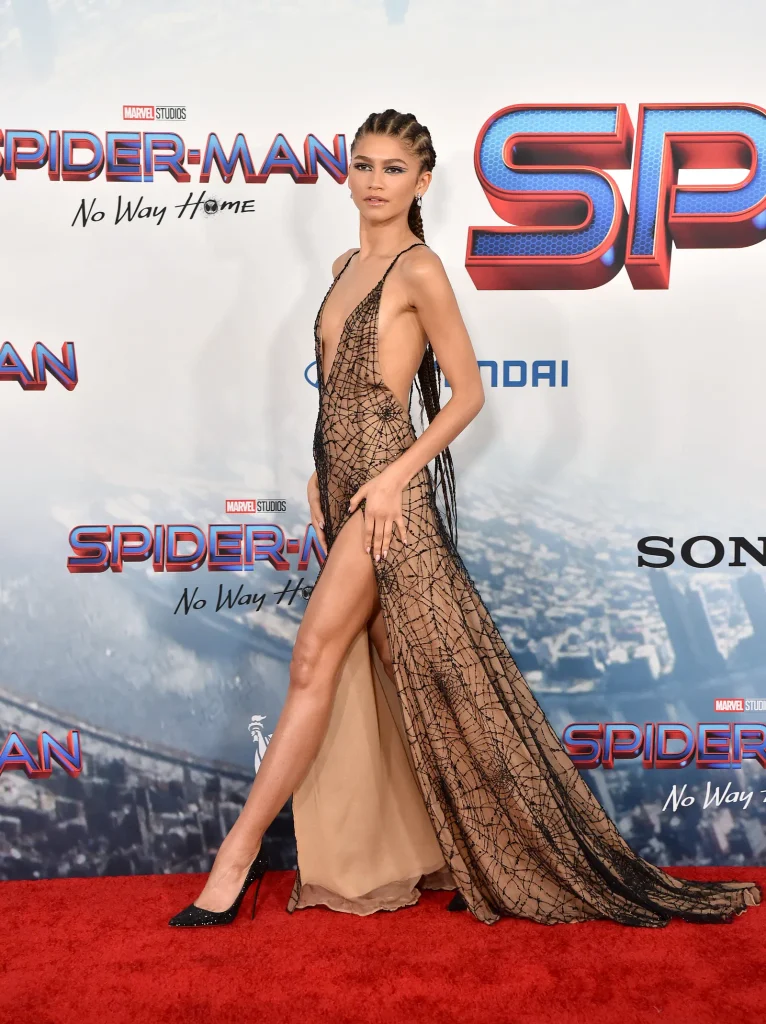
Spider-Man: No Way Home, Los Angeles premiere, 2021.
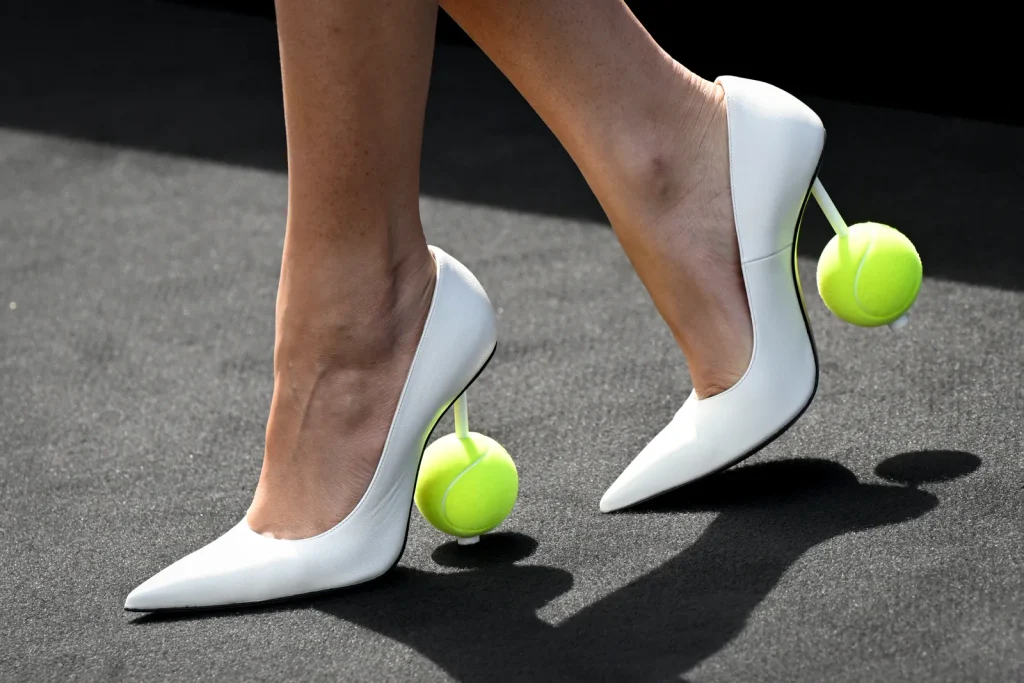
At the Challengers photocall in Rome, Zendaya wore custom Loewe pumps with tennis balls pierced through the heels, transforming the film’s central sport into a surreal fashion detail. From a distance, the white stilettos looked polished and conventional; up close, the bright green balls disrupted that elegance with a visual joke. The effect captured the film’s own tension between control and play, since tennis operates as both a professional discipline and a charged game between its three central characters.
By placing the reference at her feet, the styling avoided treating Zendaya like a literal tennis player while still keeping the movie present in every full-length photograph. The shoes showed how a single, unmistakable object could carry an entire promotional theme without requiring the rest of the outfit to explain it.
Bringing In Archival Fashion
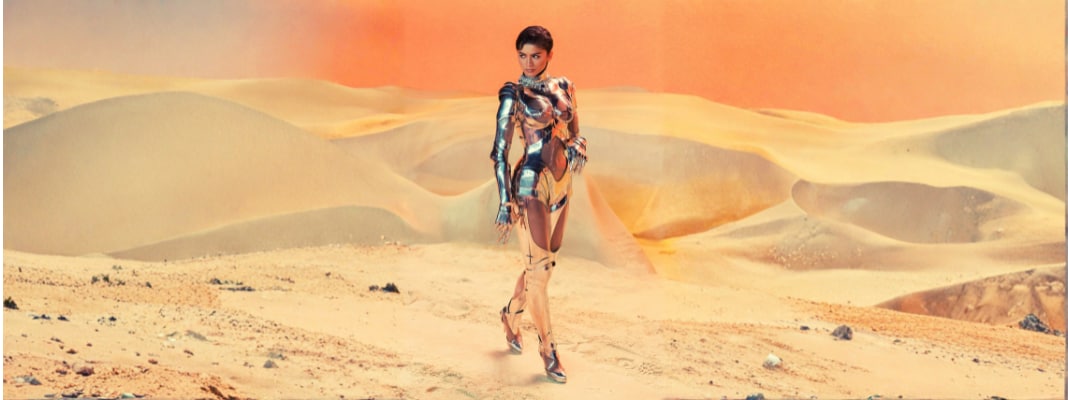
Archival fashion works differently because the story comes from placing an existing design inside a new cinematic context. Thierry Mugler’s 1995 robot suit and Alexander McQueen’s 1999 circuit-board suit already carried past visions of technology, but the Dune: Part Two press tour recast them as artifacts from a futuristic universe. Neither piece was created for the film, yet both seemed to speak its language of machines, power, and unfamiliar worlds.
Another for Challengers, a white Ralph Lauren halter dress from 1992 gained a new identity through its tennis-inspired collar, fitted bodice, and pleated skirt. By selecting archival pieces that already contain the right visual clues, Zendaya and Law Roach allow fashion history to enter the film’s story without rewriting it.
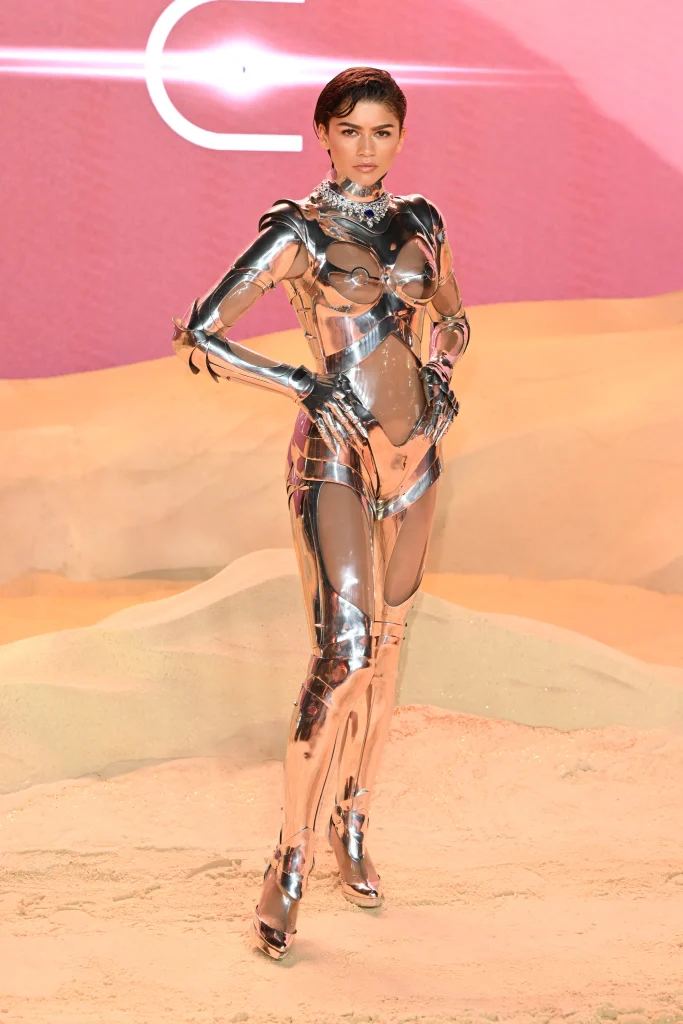
Dune: Part Two, London premiere, 2024.

Challengers, Milan photocall, 2024.
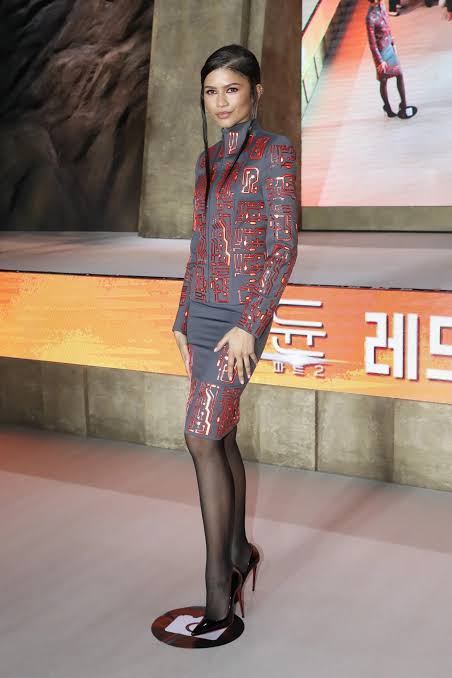
Dune: Part Two, Seoul premiere, 2024.
Evoking the Film’s World
Some method-dressing looks evoke a film’s atmosphere, setting, or wider fictional universe rather than Zendaya’s specific character. Her sand-colored Balmain leather gown for the Dune premiere appeared sculpted and wet, as though the harsh terrain of Arrakis had been molded directly around her body. Its earthy color and liquid texture captured the planet’s physical world without reproducing anything Chani wears onscreen.
For the Spider-Man: No Way Home promotional period, Zendaya’s archival Roberto Cavalli gown featured a gold metal spine that recalled the mechanical menace of Doctor Octopus and the franchise’s larger gallery of villains. In both cases, the connection relies less on literal costume and more on transporting a piece of the movie’s universe onto the red carpet.

Dune, Venice premiere, 2021.
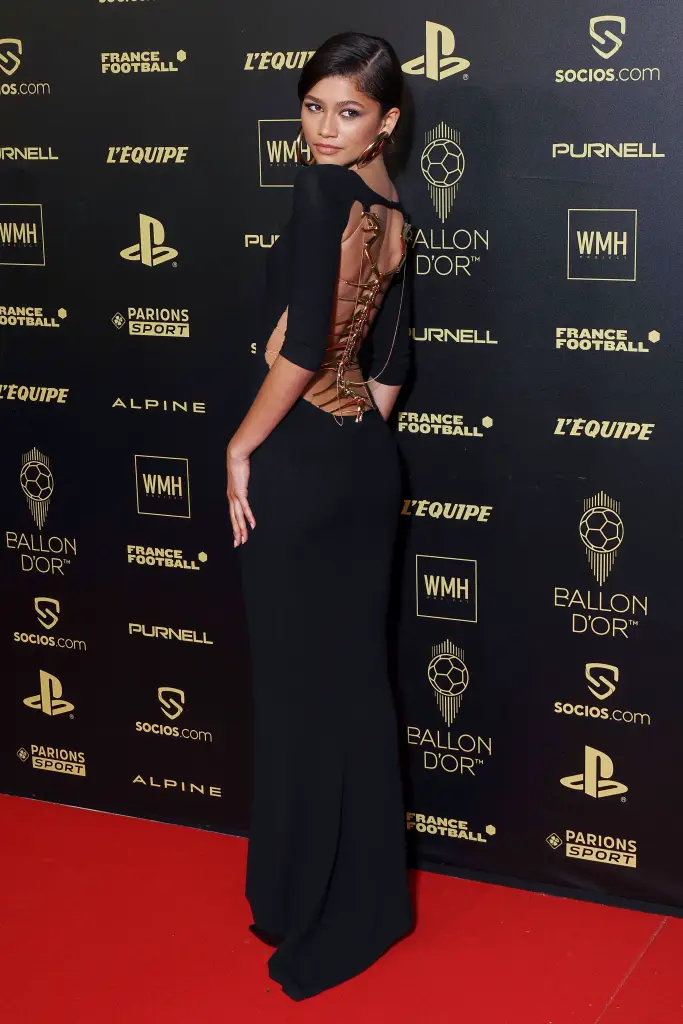
Ballon d’Or, Paris, 2021.
Film, Fashion, and Conversation
Method dressing inspires the same disagreement as any fashion movement that becomes highly visible. Some viewers delight in its wit, research, and creative transformation of a film into clothing; others see the obvious symbols and coordinated color palettes as a formula that has begun to wear thin. Both reactions speak to how firmly the practice has entered the ritual of movie promotion. A red-carpet look is no longer judged only by whether it is beautiful, but by whether it gives the audience something to decode, photograph, share, and discuss.
Film culture now extends far beyond an actor’s live or onscreen performance. During the promotional period, cinema becomes a meeting place for acting, fashion, art, design, and image-making, all working to hold public attention until release day and beyond. Actors are expected to sustain the excitement around a project across premieres, interviews, and social media, often before audiences have seen the film itself. Method dressing answers that demand by turning every appearance into another scene and every outfit into another piece of publicity. Love it or find it tired, the strategy works because it keeps both the film and the actor inside the cultural conversation.