

Last Updated on March 9, 2026 by Hanna Tejada
Dry eyes can feel like a small problem until it starts messing with your day. Burning by lunchtime. Watery eyes the moment you step outside. That gritty “something’s in my eye” feeling every time the air conditioning kicks on.
If this sounds familiar, you’re not alone. If you’ve wondered whether switching to glasses, or choosing the right pair, could help, the answer is sometimes yes.
Glasses will not cure dry eyes. Still, the right frames can ease two common triggers. Airflow that speeds up tear evaporation, and contact lenses that make symptoms feel worse for many people.
Why Dry Eyes Show Up More in Women
Women are more likely to deal with dry eyes, and it’s not only about screen time. Hormonal shifts during pregnancy, while on birth control pills, and especially around menopause can reduce tear production and affect tear quality. The National Eye Institute, Mayo Clinic, and the American Optometric Association all point to hormonal changes as a risk factor.
If your symptoms got noticeably worse during a certain life stage, that context matters. Bring it up at your next eye exam.
For many women, it’s rarely one thing. It’s screens plus hormones plus dry indoor air plus contacts, all stacking together.
When Glasses Can Actually Help
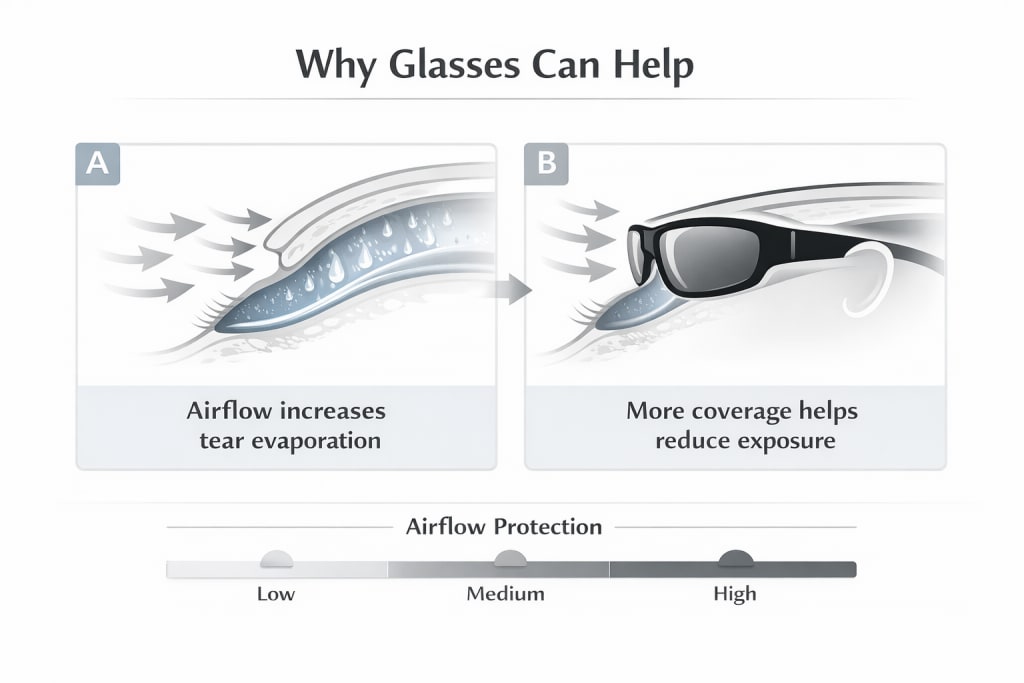
If Wind or Airflow Triggers Your Dry Eye
If airflow is a trigger for you, glasses can act like a small windbreak for your tear film. Tear evaporation speeds up when air moves across your eyes. Even a gentle desk fan or a car vent aimed at your face can become a daily irritant. The American Academy of Ophthalmology also recommends wraparound sunglasses in windy conditions to reduce how quickly the eye surface dries out, and the same idea can help indoors too.
Common airflow triggers worth watching:
- Desk fans pointed at your face
- Car vents aimed upward
- Cold office air conditioning
- Windy commutes or outdoor workouts
If Contact Lenses Make Symptoms Worse
If contact lenses make your symptoms flare, taking breaks can help. If your eyes feel noticeably better on glasses-only days, that’s useful information. Mention it to your eye doctor. Mayo Clinic Health System also notes that many people don’t bring up dry eyes symptoms during appointments, even when it affects daily life.
Which Glasses Work Best for Dry Eyes?
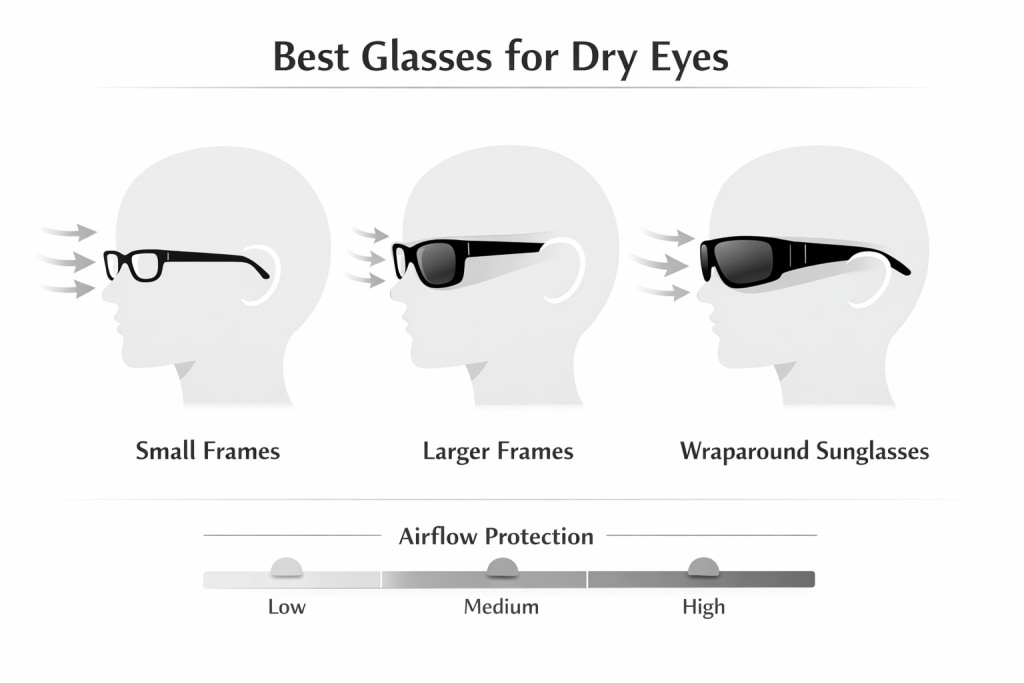
Bigger Frames Usually Help More
More coverage around the eye can mean less direct airflow reaching the eye surface. Look for medium to large frames that sit fairly close to your face, rather than smaller styles with gaps at the sides.
Wraparound Sunglasses for Windy Days
Wraparound sunglasses are worth trying if wind is your main trigger. They’re one of the simplest changes you can make for outdoor dryness, and the AAO calls them out for this reason.
Moisture Chamber Glasses for Stronger Symptoms
Moisture chamber glasses take things further. These frames use side shields or a soft seal to create a calmer pocket of air around the eyes. A clinical study found they improved comfort and tear film stability in people with dry eyes disease. The look can lean sporty depending on the style, but for stronger symptoms, they can make a real difference.
What Glasses Won’t Fix
If dry eyes is driven by eyelid oil gland dysfunction, chronic inflammation, or a medication side effect, glasses can reduce irritation, but the root cause still needs care. dry eyes treatment often starts with artificial tears and can move to more targeted options based on what’s causing the problem. Frames can help manage symptoms, but they are not a replacement for treatment.
If symptoms stick around, get worse, or start affecting daily life, it’s worth seeing an eye doctor. Mayo Clinic recommends seeking care for prolonged dry eye, including eyes that feel red, tired, irritated, or painful.
Practical Changes That Help Alongside the Right Frames
- Redirect desk fans and car vents away from your face
- Use a humidifier if indoor air feels dry
- Take contact lens breaks when symptoms flare
- Blink more intentionally during long screen sessions
- Start with preservative-free artificial tears for quick relief
Shopping With Dry Eyes in Mind
Frame shape matters more than special lens coatings when it comes to day-to-day comfort. Start with medium to large frames for more coverage. For outdoor errands, look for sunglasses with wider side coverage. If wind is your main trigger, try a wrap-style sunglass first since it’s the most direct fix.
Not sure where to start? Our team is happy to help you find a frame that fits your face and your needs.