

Last Updated on September 25, 2026 by Hanna Tejada
American preppy style has always been a translation, not an original. Its silhouette, its collegiate ease, even its color instincts all trace back to British sporting and aristocratic dress. But somewhere between the mid-century “sack suit” and the mass-market prep of the 1980s and 90s, the translation got sloppy.
What survived was the shape. What got lost was everything that made the original worth copying: the weight of the fabric, the discipline of the construction, the patience to let a garment age instead of replacing it.
Not a call to dress like a country squire, but a category-by-category playbook for upgrading a preppy wardrobe using the actual principles behind British quiet luxury.
Where This Habit of Loud Signaling Came From
The word “prep” is borrowed from British preparatory boarding schools, and the template goes back further still: mid-19th-century Oxford and Cambridge rowing clubs used brightly striped flannel jackets so spectators could tell crews apart along the riverbank.

Students then wore those jackets off the water as a small act of rebellion against Victorian formality, arguably the first true instance of luxury sportswear.
Add to that the British country wardrobe: heavy wool tweed sporting coats, waxed cotton, Argyle knitwear, sturdy brogues, all engineered for rain, thorn, and cold. Both ideas rest on the same foundation: dense, natural materials built to hold their structure for decades, rather than the lightweight synthetic blends behind most disposable American sportswear. Northamptonshire remains the global capital of Goodyear-welted shoemaking for exactly this reason.
Heritage makers like Crockett & Jones (established 1879) and Edward Green (established 1890) perform over 200 hand operations per pair across an eight-week production cycle, using vegetable-tanned leather that can be fully resoled and rebuilt for decades. Commercial prep footwear, cemented rather than welted, is functionally disposable after one to three seasons.
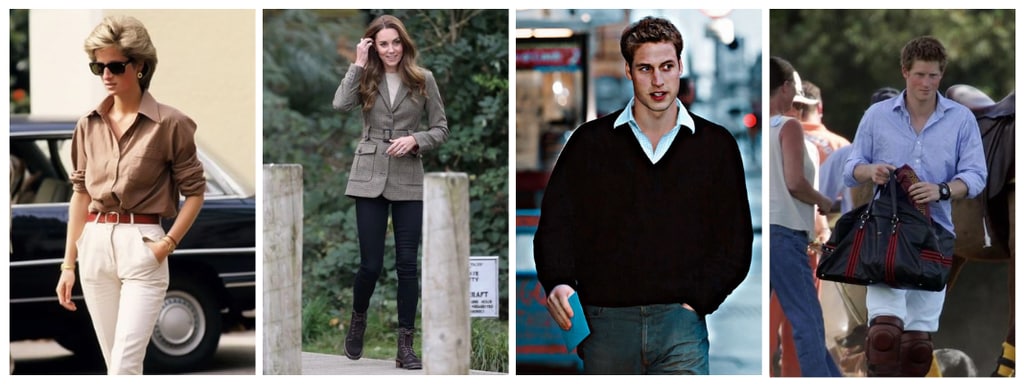
Then the 1980s arrived, and mass retail traded that restraint for high-contrast pastels, prominent logos, and cheaper synthetic-blend fabric. American style kept the outline of British tailoring and let the substance go.
The Two Ideas Quiet Luxury Actually Runs On
Code over logo
Where mass-market prep signals status through an embroidered logo, British tailoring signals it through weave density, cloth weight, and coded detail: an unbranded club tie, a subtle regimental stripe. The authority comes from proportion and texture, not a brand name stitched to the chest.
Patina over pristine
Traditional British menswear treats visible wear as a badge of authenticity rather than a flaw. King Charles III still wears decades-old, visibly repaired suits from Anderson & Sheppard, and his bespoke John Lobb shoes are maintained through discreet leather repair rather than replacement. It’s telling that mid-century Princeton students tried to fake this effect by sandpapering the collars of brand-new Oxford shirts. The instinct was right; the shortcut wasn’t. Real patina has to be earned through years of actual wear, not manufactured overnight.
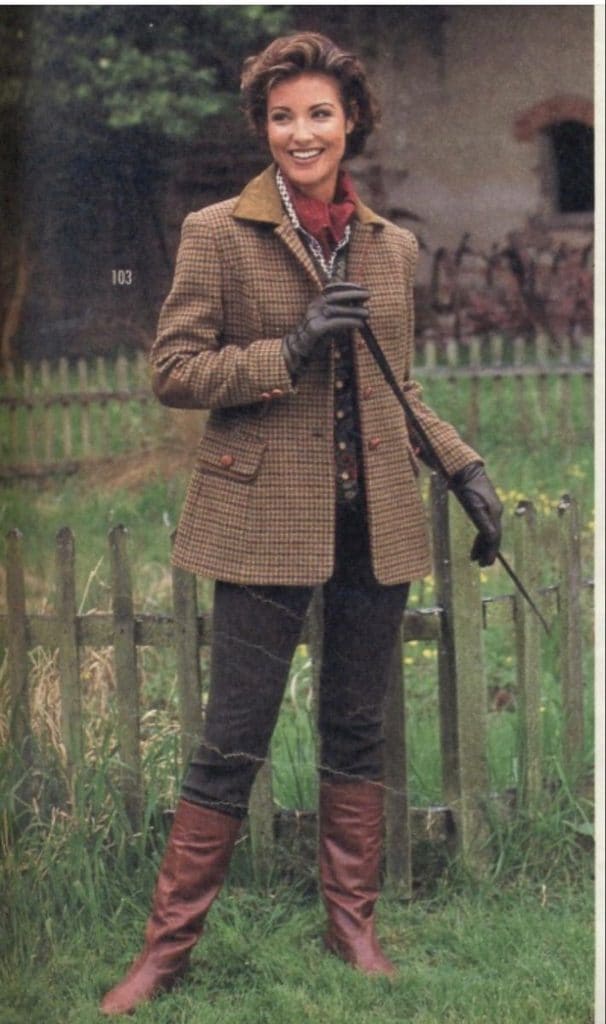
Both ideas rest on the same foundation: dense, natural materials built to hold their structure for decades, rather than the lightweight synthetic blends behind most disposable American sportswear. Northamptonshire remains the global capital of Goodyear-welted shoemaking for exactly this reason.
Heritage makers like Crockett & Jones (established 1879) and Edward Green (established 1890) perform over 200 hand operations per pair across an eight-week production cycle, using vegetable-tanned leather that can be fully resoled and rebuilt for decades. Commercial prep footwear, cemented rather than welted, is functionally disposable after one to three seasons.
The Category-by-Category Swap List
This is the practical core of the whole exercise. None of it requires reinventing a wardrobe overnight, just redirecting spend toward the categories where the British approach actually changes how long something lasts.
American prep or British quiet luxury?
Swipe left for standard American prep, right for the British quiet luxury swap. Five frame calls, your read.
Trading Saturation for Tone
The most immediate visual shift is color. Swap high-contrast pastels (neon pink, bright green, stark white) for a grounded, nature-drawn palette: deep navy, forest green, slate grey, stone, tobacco brown, rich cordovan.
When accent color shows up, it should read as muted and weathered, a Breton red faded toward dusty pink rather than a saturated block. Lower the contrast and the texture of the fabric itself becomes the interesting part of the outfit, not the color.
The Blouson as the New Blazer
The gold-button navy blazer remains a cornerstone of American prep, but it can feel stiff and overly formal in modern, unstructured settings. British tailoring solves this with what might be called contextual fluidity: outerwear that reads as tailored without carrying the formal weight of canvas construction.
The tailored blouson, or luxury Harrington jacket, cut in Solbiati linen, garment-dyed cotton, or suede, finishes cleanly at the hip with a structured collar and moves between casual, professional, and evening settings without ever looking out of place.
Subverting the Blazer-and-Tie Formula
Contemporary British dressing frequently swaps the stiff dress shirt under a blazer for something with more texture. A fully-fashioned merino or cashmere crewneck under a double-breasted blazer creates a clean neckline while dropping the rigid corporate formality, and the smaller lapel opening on a double-breasted jacket frames fine-gauge knitwear particularly well.
Pairing a textured corduroy jacket over a chambray or indigo denim shirt balances sharp tailoring with functional utility. Unstructured tailoring, like a cotton-canvas or linen chore blazer, keeps the classic lapel line while offering the relaxed durability of workwear.
The Point of All of This
None of these swaps are about dressing more formally or spending more for its own sake. The underlying shift is about what a garment is built to do over time. American prep, especially in its mass-market form, optimized for speed and low cost: buy it, wear it a season or two, replace it.
British quiet luxury optimizes for the opposite: a smaller wardrobe, built from better materials, worn long enough that the wear itself becomes part of the garment’s value. Merging the ease of American prep with the material discipline of British tailoring is not a costume change. It’s a slower, more durable way of getting dressed.