
Last Updated on April 28, 2026 by Hanna Tejada
There’s a particular kind of attention that goes into dressing for Coachella. The desert heat, the cameras, the crowd: every choice gets scrutinized, shared, and archived. And while most of the conversation tends to orbit outfits, shoes, and jewelry, eyewear has quietly become one of the more reliable indicators of where a person’s aesthetic actually lives.
This year, across both weekends, a handful of artists and performers wore frames worth a closer look. Not because they were the loudest thing on stage, but because they were considered. Each of the best glasses at Coachella said something specific about proportion, about reference points, about how much thought goes into the things that sit on your face for eight hours under direct sunlight.
These are the best glasses at Coachella:
LP Giobbi
Among everyone on this list, Giobbi made the most quietly radical choice: she wore eyeglasses. Not sunglasses. Not tinted lenses. Actual corrective frames, worn onstage, in front of a festival crowd. The frames are oversized and black, defined by a top edge that runs in a single, unbroken horizontal line with no curve, no arch, no softening.
For a DJ, someone who already operates behind a setup of hardware and technology, frames that carry that same functional, almost industrial quality make a kind of sense. They don’t perform femininity the way oversized cat-eyes might, and they don’t defer to trend the way tinted ovals or wire frames would. Wearing prescription glasses on a festival stage still carries a certain stigma in 2026, with the assumption that performers should opt for contacts or simply not be seen squinting. Giobbi’s choice, whether deliberate or incidental, quietly pushes back on that.
Charli D’Amelio
D’Amelio’s pair for the weekend was horizontal, oval, and gently wraparound, with lenses that curve slightly around the face rather than sitting flat against it. The shape traces back to late 90s and early 2000s athletic eyewear: the kind of frames that appeared on professional cyclists and skiers before migrating into fashion. That migration happened gradually, then all at once, and by 2025 the oval wrap had become one of the more prominent silhouettes in the Indie Sleaze and Y2K revival that’s been circulating through fashion for several years running.
D’Amelio has been associated with the Prada Symbole line in the past, which operates in similar territory, that tension between athletic reference and high fashion. This particular pair reads more archival than current-season, less logo-forward and more rooted in the shape itself. The result is a frame that feels of its moment without announcing it, and the most enduring festival eyewear choices tend to be exactly that: the ones that don’t obviously explain themselves.
Peso Pluma
Pluma wore teardrop aviators, almost certainly Chrome Hearts. The silhouette originated in the 1930s as functional gear for military pilots, with the teardrop shape designed to cover the entire field of vision including peripheral edges that a standard round lens would leave exposed. The brow bar, that horizontal metal bridge sitting above the nose, was added for structural support: a way of keeping thin wire frames rigid under pressure. It’s one of the oldest and most iterated silhouettes in eyewear history, and it has needed very little adjustment since.
What’s interesting about the aviator’s longevity is that it has less to do with fashion and more to do with geometry. The downward taper of the lens follows the natural curve of the cheek, so the frame sits in visual harmony with the face rather than against it. On Pluma, they look exactly as they should: grounded, masculine, and entirely uninterested in being noticed as a statement. They’re there because they’re correct, not because they’re new.
Davido
Davido’s frames operate on a different scale altogether. Where Pluma’s aviators were fine and minimal, Davido’s navigator-style frames are deliberately heavy, with a wider silhouette, a higher bridge, and thick gold trim that gives the frame significant visual mass.
The logic behind the choice is sound: Davido performs with large, brilliant-cut diamond jewelry that carries its own gravitational pull. A fine wire frame in that context simply disappears, leaving the face unanchored. A heavier frame with warm metal tones that echo the gold of his chains creates balance instead.
Fashion editors sometimes describe this as “visual weight distribution,” the idea that accessories don’t exist in isolation but in relation to each other, and that eyewear sometimes holds a composition together rather than standing alone as the focal point. The navigator shape itself, slightly wider than a standard aviator with a higher and more geometric frame, also carries associations with 1970s menswear and the confident, large-scale accessorizing that defined that era. There’s a deliberateness to that reference that works well in the Afrobeats context, where scale and presence are already part of the visual language.
DJ Hugel
Hugel’s frames are the most formally unusual pair on this list. The defining feature is the bridge: a protruding, vented element that sits over the nose and gives the profile an almost skeletal quality, reading less like eyewear hardware and more like something from a piece of medical equipment or a high-performance helmet. The silhouette is entirely fluid, finished in a high-gloss black that draws attention to the organic complexity of the curves.
This is a design category sometimes described as “biological-industrial,” where the frame is engineered to look like anatomical hardware rather than a traditional accessory. The look sits at the intersection of elite sports performance gear and festival fashion, a tension that shouldn’t work on paper but does in the right context. In electronic music particularly, there’s a subset of performers for whom projecting a “high-output” identity is part of the job. These frames carry that. They suggest someone who has thought carefully about what they put on their face and is entirely comfortable with the result being a little strange.
Glasses We Recommend
Thin Frame Aviator Glasses
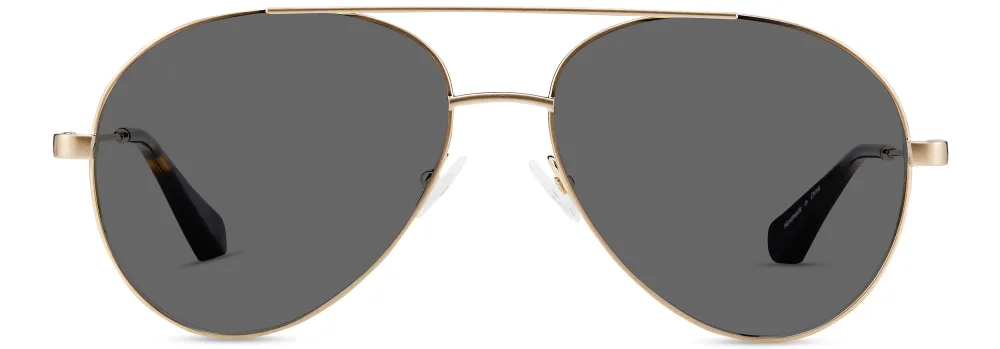
What the Lowerre offers that Pluma’s pair doesn’t is accessibility without compromise. The gold frame aviator sunglasses frame sits well on a range of face shapes, the lens coverage is generous without being oversized, and the soft gold tone works in natural light as well as it does under stage lighting.
His teardrop aviators worked because the shape is geometrically sound. The Lowerre follows the same logic: a clean teardrop silhouette, a brow bar that sits just right above the nose bridge, and a brushed gold finish that keeps the whole thing warm without being loud. The proportions are classic in the truest sense.
Bug Eye Sunglasses
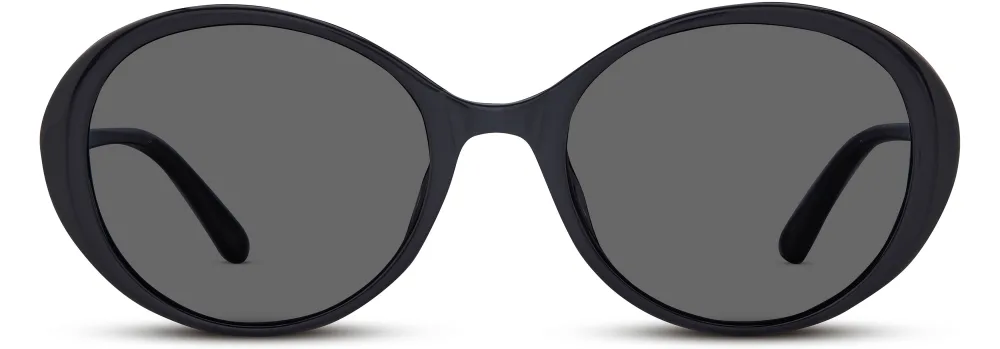
D’Amelio’s bug eye sunglasses drew from the athletic and Y2K revival that’s been building for several years, but the underlying appeal is simpler than the trend: a soft, rounded silhouette that sits gently on the face without demanding attention. The Mae operates in the same register.
The oval shape is fluid and continuous, without hard angles or geometric edges, and the carbon black finish keeps it grounded rather than precious. It’s the kind of frame that works harder than it looks like it’s working.
Black Frame Eyeglasses
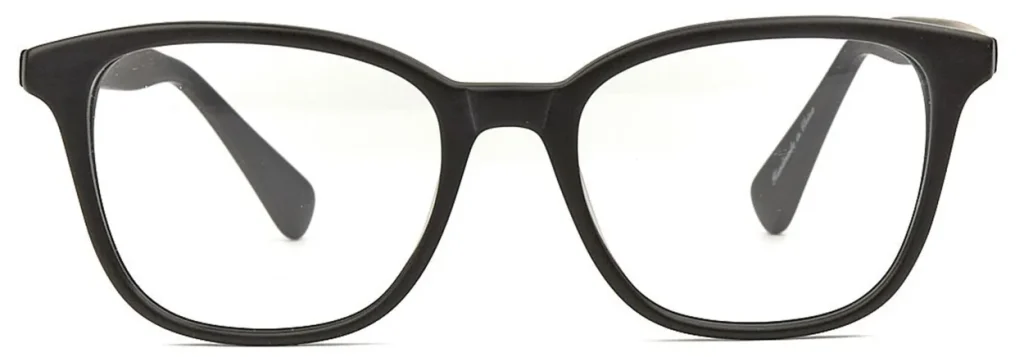
Giobbi’s frames worked because they were uncompromising: a straight, unbroken top edge that gave the face a clean, almost architectural line. The black frame eyeglasses shares that same underlying logic. The frame is wide and rectangular, with a top bar that reads as intentional rather than decorative.
The matte black finish removes any shine that might soften the effect, keeping the overall look precise and direct. It’s a frame for someone who has decided that their glasses should say nothing unnecessary, and means it.
Black Frame Eyeglasses
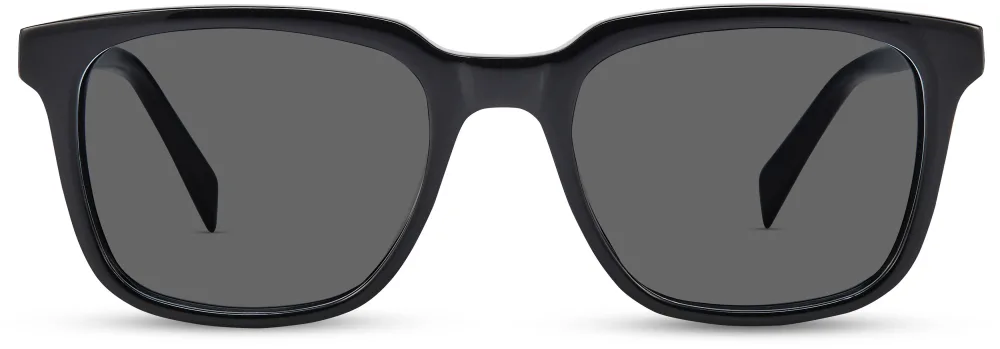
Davido’s navigator frames worked because they had mass: a heavier silhouette that could hold its own against substantial jewelry and a high-energy stage presence. The Prescott brings a similar weight to its category. The square silhouette is wide and structured, with a frame depth that gives it visual substance without needing embellishment to register.
The practical case for the Prescott is that it translates well outside of a specific occasion. A frame that holds its own against a full look also holds its own against a plain one, and that kind of range is harder to find than it sounds.
Grab The Right Glasses at Classic Specs
What this year’s Coachella made clear is that the most compelling eyewear choices aren’t defined by price or exclusivity. They’re defined by intention: knowing what a frame does to a face, and choosing accordingly.
Classic Specs was built on exactly that premise. We got frames that have been thought through on their own terms, designed to do what good eyewear has always done: sit correctly, read clearly, and last beyond the moment they were chosen for. Whatever your Coachella frame of reference, there’s something in the collection that holds up to it. Explore our collection now.